Poppy Playtime Chapter 1
- 4.3
- Rating
- 1.00M
- Installs
- $2.99
- Price

 Analysis by App-foxy
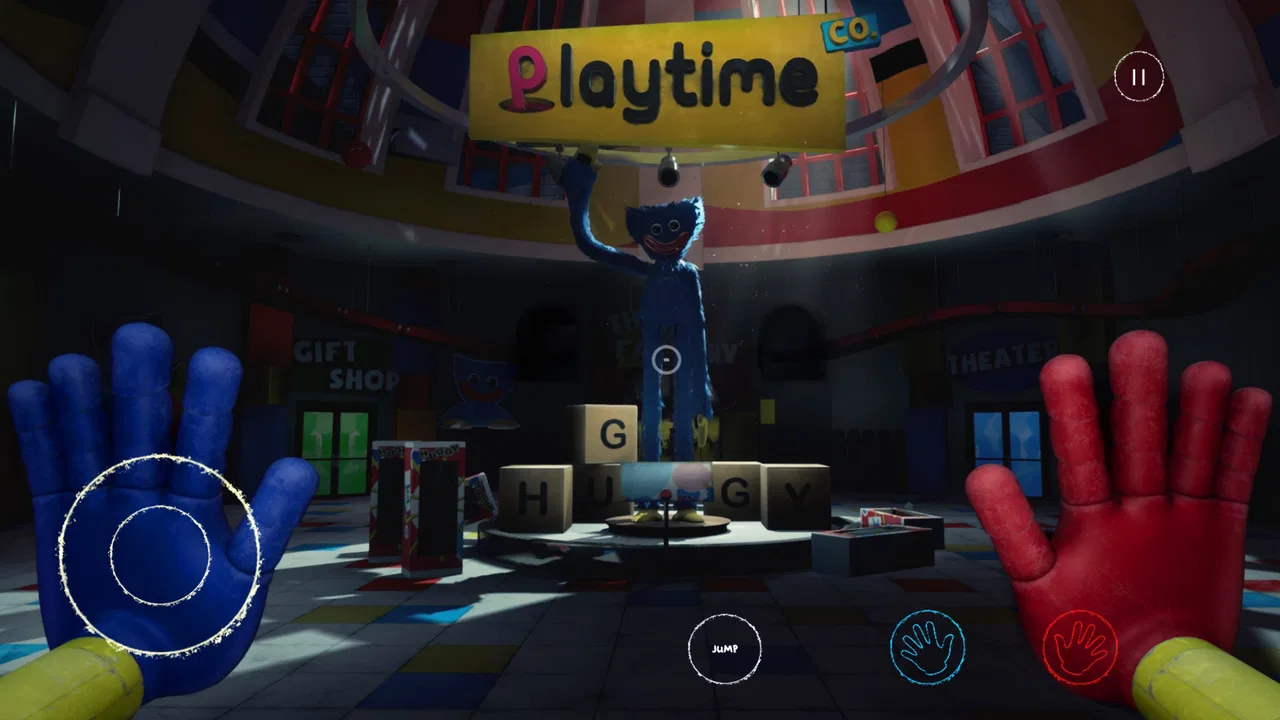
Poppy Playtime Chapter 1 made a strong first impression on me because it understands that a horror game does not need constant action to feel threatening. Its abandoned toy-factory setting, bright colors, oversized mascot design, and uneasy quiet work together before the game asks me to solve anything. I play as a former employee returning to a deserted workplace, and that simple setup gives every hallway a question: what happened here, and why does the building still feel occupied?
This is an adventure game from Mob Entertainment, released for mobile on February 16, 2022. It is a paid experience rather than a free download, costing $2.99, and it carries a Teen content rating. The current version is 1.0.18, while Android users need at least version 5.0 of the operating system. Those details matter because this is best approached as a compact, focused horror experience, not as an endlessly replayable mobile game.
Why the first minutes work so well
The opening does a good job of making the factory feel wrong without immediately explaining every detail. The environment is large enough to suggest a much bigger history, but empty enough to make ordinary objects seem suspicious. Posters, displays, work areas, and toy-themed decoration do more than fill the background: they create a contrast between childhood-friendly design and industrial abandonment.
You May Also Like

 Blood Strike: 2.5 Anniversary
Blood Strike’s Loadouts Turn Every Drop Into a Tactical Gamble
A close look at Blood Strike’s custom loadouts: how fast access to signature weapons reshapes its battle royale rhythm, rewards preparation, and narrows the gap between fights.

 Pandora - Music & Podcasts
Pandora’s Music Is Easy to Start, but Harder to Recover
Pandora’s strength is its low-effort path from a seed to a station. Its weak spot is how much confidence it asks you to place in connection, setup, and quiet recovery.

 8 Ball Pool
 Is Built on Rivalries, Rematches, and Routine
A close look at the rivalries, rematches, shared routines, and unanswered safety questions that turn a quick pool match into a persistent mobile community.

 Samsung Music
’s Quiet Strength Is Playing What You Already Own
Its reach comes less from spectacle than from dependable access to a personal library. That simplicity is both the app’s strongest retention engine and its ceiling.

 AccuWeather: Weather Radar
AccuWeather Review: A Quick, Clear Forecast for Everyday Decisions
For everyday plans, the best forecast is the one you can understand quickly. AccuWeather makes rain timing, radar, and local conditions easy to act on, with a few trade-offs.

 Hill Climb Racing
Why Hill Climb Racing Still Turns Crashes Into One More Run
A tiny car, a bumpy hill and one more upgrade: Hill Climb Racing keeps resurfacing because its simple chaos makes every near-miss feel personal.
More From Our News Desk



I especially like how the game uses familiarity against the player. The colors and toy shapes initially look playful, yet the lack of people turns that friendliness into something uncomfortable. A smiling character can feel more threatening than a conventional monster when the surroundings imply that the smile was designed to welcome visitors. That visual contradiction is the central strength of the presentation.
The game also benefits from asking me to look before it asks me to run. Early progress depends on noticing doors, controls, clues, and environmental relationships. This makes exploration feel purposeful rather than like wandering through a decorative horror set. When I reached a new area, I was usually thinking about what I had missed instead of simply waiting for a scripted scare.
That said, the first-person mobile perspective can make the opening feel less comfortable than it would on a larger screen. Small visual details matter, and touch controls require a little adjustment before movement and interaction feel natural. I would recommend playing with headphones and enough screen brightness to read the environment clearly, while avoiding a dark room if you are prone to eye strain.
A setting that communicates through design
The factory is the real narrator here. Rather than relying on long explanations, the game lets its rooms suggest how the place functioned and what kind of image it wanted to present. The design language repeatedly mixes production, entertainment, and decay. That combination gives the setting a recognizable identity instead of making it feel like a generic haunted building.
One of the smartest choices is the way scale is used. Toy-related objects can be oversized and visually inviting, but inside an empty factory they also make me feel small. Corridors and rooms are arranged to create anticipation, with some areas encouraging careful inspection and others making me want to move through quickly. The contrast keeps the environment from becoming visually flat.
The color palette also carries mechanical value. Bright signs and distinctive objects help me orient myself, while darker or more neglected sections signal a change in mood. I found myself using visual landmarks to remember where I had been and where a newly acquired clue might matter. That is a subtle strength: the art direction is not only attractive, it helps the player build a mental map.
For a better experience, I suggest resisting the temptation to rush through rooms after finding an obvious objective. Look at the edges of spaces, check unusual corners, and revisit nearby areas after solving a puzzle. The game often makes environmental observation feel worthwhile, and moving too quickly can make the factory seem more confusing than it really is.
The GrabPack makes the world interactive
The signature tool is the GrabPack, a device that lets me interact with objects from a distance. It is not just a visual gimmick. It gives the game a particular physical language: doors, switches, power connections, and other obstacles become problems of reach, position, and sequence. That makes the factory feel like a place with systems rather than a collection of locked doors.
I enjoyed how the tool connects exploration with puzzle solving. Instead of opening a menu full of abstract commands, I usually have to understand what an object does in the room itself. A cable is not merely a key item; it can become part of a route through the space. This keeps the puzzles grounded in the setting and makes successful solutions feel like practical discoveries.
The trade-off is that some interactions are easier to understand than to execute on a touchscreen. Precision, camera movement, and positioning can become slightly awkward, especially when I know the intended solution but cannot immediately line up the interaction. This is not a deal-breaker, but it means patience is part of the mobile experience. If a puzzle seems unresponsive, I first adjust my position and camera angle instead of assuming that I missed a clue.
The tool also creates a useful sense of vulnerability. It gives me more reach, but it does not make me powerful in the usual action-game sense. I still have to read the room and decide whether I am safe. That distinction helps the game preserve tension even when I am actively interacting with the environment.
Sound does the quiet work
The sound design is one of the main reasons the atmosphere holds together. Silence is used carefully, so ordinary movement and environmental noises become meaningful. When a space is mostly quiet, a distant sound or sudden change in the audio can make me stop and reconsider what I thought was happening.
Headphones make a noticeable difference because the game’s mood depends on separation between background stillness and nearby detail. I could hear the factory as an empty place rather than as a constant wall of music. That restraint gives the more dramatic moments greater impact. If every room had a loud soundtrack, the tension would become predictable; here, the absence of sound often does more work.
The audio also supports the setting’s identity. The factory does not feel like a medieval mansion or a conventional haunted house because its implied history is tied to toys and production. Sounds connected to machinery, spaces, and movement reinforce that idea without needing a narrator to explain it. The result is a coherent mood in which the visual and audio design point in the same direction.
My practical advice is to avoid playing this with the phone muted unless you only want to inspect the puzzles. You can still move forward, but you lose an important layer of warning and atmosphere. At the same time, I would keep the volume at a comfortable level rather than turning it up aggressively; the game works through contrast, not just loudness.
Pacing that alternates curiosity and pressure
The rhythm is more effective than a nonstop scare sequence would have been. The game gives me time to explore, understand a location, and become comfortable with its visual rules. Then it changes the emotional pressure by introducing a new threat or making a familiar space feel unsafe. That pattern lets anticipation build instead of exhausting me.
The slower sections are important because they make the factory memorable. I can study a room, notice how objects are arranged, and form expectations about what the game wants me to do. When the pace shifts, those expectations become part of the tension. I am not only reacting to a surprise; I am wondering whether the environment I just learned is about to betray me.
There are moments when the pacing may feel more deliberate than some mobile players expect. Someone looking for quick rounds, constant rewards, or rapid combat will probably find the experience too restrained. This is closer to a guided horror adventure than to an action game. The reward is atmosphere and discovery, not a stream of upgrades or competitive achievement.
A realistic use case is an evening session with enough uninterrupted time to follow the mood. I would not choose it for a five-minute commute or for playing while distracted by notifications. The game benefits from continuity because its tension depends on remembering the layout and carrying questions from one room into the next.
How the mechanics support the horror
The strongest mechanical decision is the close relationship between exploration, environmental puzzles, and threat. Each part supports the others. Exploration teaches me how the factory is arranged, puzzles make me examine that arrangement, and danger makes familiar routes feel different when I return through them.
This is where the game compares favorably with many mobile horror alternatives that depend mainly on jump scares. A scare can be memorable once, but a puzzle tied to the setting gives me something to think about before and after the moment. Poppy Playtime Chapter 1 is not mechanically deep in the way a large adventure game might be, yet its limited toolset is used consistently enough to create a clear identity.
It is also different from mobile action-horror games that give the player weapons or frequent combat options. Here, I cannot solve every problem by attacking it. That makes observation more important and keeps the focus on escape, timing, and understanding the environment. Players who want direct control and combat power should choose a different kind of horror game; players who enjoy feeling exposed may appreciate this approach.
The main friction comes from mobile input. Touchscreen controls can make camera adjustments and precise interactions less immediate than they would be with a physical controller. I found that slowing down helped more than repeated tapping. Move into position, center the object, and give the interaction a moment. That small workflow reduces many avoidable mistakes.
Another useful habit is to treat every new item or tool as a reason to reconsider nearby spaces. I would not assume that progress only happens in the room where an objective appears. The game encourages a loop of discovery, testing, and backtracking, and that loop is more satisfying when I actively connect clues to the factory’s layout instead of waiting for a glowing instruction.
Who will enjoy it, and who should skip it
I would recommend this to players who like atmospheric horror, environmental storytelling, and puzzles that are embedded in a physical location. It is particularly suitable for someone who wants a recognizable horror premise without committing to a huge open-world game. The Teen rating also gives a general sense of the intended audience, although the tension can still be intense for younger or more sensitive players.
I would be more cautious recommending it to anyone who dislikes chase pressure, unsettling mascot imagery, or games that make them search for the next step. The experience expects attention. If you prefer clear objective markers, constant action, or relaxed exploration, the same qualities that make this game distinctive may become frustrations.
The paid price of $2.99 is reasonable for someone who wants a focused chapter and values presentation, but it is worth understanding the purchase as an entry into a story rather than an endlessly expanding game. Players who judge value mainly by replay hours may prefer a longer adventure or a free-to-play title with more repeatable activities. I see this as better suited to a concentrated horror session than to daily play.
Its popularity is substantial, with over one million installs and an average rating of 4.3 from around forty-four thousand ratings. Those figures suggest that the mobile version has found a broad audience, but they should not replace personal judgment. The important question is whether you enjoy slow-burn tension and environmental problem solving more than combat or collection systems.
Mobile comfort and practical expectations
Before starting, I would make sure the phone has enough battery and that notifications are unlikely to interrupt the session. Horror depends on concentration, and an unexpected message can break the carefully built mood. Headphones improve the sound layer, while a comfortable grip helps with the repeated camera adjustments that touch controls require.
The minimum Android requirement is version 5.0, which makes the game accessible to a wide range of Android devices on paper. Actual comfort will still depend on the phone’s screen size, performance, and touch response. A smaller display can make environmental details harder to inspect, and a crowded interface can make precise movement feel more demanding.
I would also recommend saving mental notes about important rooms and routes. The factory’s visual landmarks make this easier than in a completely dark horror game, but the experience is more enjoyable when I remember why a location matters. If I become stuck, I retrace the last meaningful change rather than wandering randomly. That approach keeps the puzzle-solving process focused.
For iOS or Android players deciding between this and a more traditional horror title, the deciding factor is control style. If you want a story-led adventure built around a distinctive tool and a carefully staged setting, this is a good fit. If you want broad movement freedom, weapon upgrades, or repeated challenge modes, another category of game will serve you better.
My atmosphere verdict
What stays with me is not a single scare but the way the art, sound, setting, and pacing reinforce one another. The abandoned toy factory looks inviting from a distance, feels suspicious up close, and becomes threatening once I understand how its spaces connect. The game’s mechanics are simple enough to learn, yet specific enough to make the world feel interactive rather than decorative.
It is not flawless. Touch controls can introduce friction, the deliberate pace will not suit everyone, and the experience is better for a focused session than for players seeking unlimited content. Some puzzles also ask for patience and careful observation instead of providing immediate clarity. Those limitations are real, but they are connected to the game’s chosen style rather than signs that it lacks direction.
For me, the best reason to play is the consistency of its mood. The GrabPack, the toy-factory imagery, the quiet audio, and the shifts in pressure all serve the same goal: making curiosity feel dangerous. The strongest feature is the unity between atmosphere and mechanics, because the things I do to progress also make me pay closer attention to the place I am exploring.
Mob Entertainment’s mobile adventure is therefore worth considering if you want a compact, visually distinctive horror game that asks you to investigate rather than simply fight. I would play it with headphones, avoid rushing, and treat the environment as part of the puzzle. For players who enjoy that kind of uneasy discovery, the $2.99 entry point is easy to justify. For everyone else, especially those seeking action or casual short sessions, the same focused design may feel restrictive.
Overall, I recommend Poppy Playtime Chapter 1 as a memorable mobile horror adventure with a clear artistic identity. It succeeds because the factory is not just a backdrop: it shapes the puzzles, controls the rhythm, and gives every sound and colorful object a little more meaning than it first appears to have.
FAQs for Poppy Playtime Chapter 1
01What is Poppy Playtime Chapter 1 about?
Poppy Playtime Chapter 1 is a first-person horror and puzzle game set inside an abandoned toy factory. You investigate the mysterious Playtime Co. facility, solve environmental puzzles, and uncover clues about what happened to the missing employees. The chapter combines exploration, suspense, and occasional chase sequences, creating a tense experience rather than a traditional action game.
02How does the gameplay work in Poppy Playtime Chapter 1?
The main gameplay involves exploring the factory, collecting clues, interacting with machinery, and solving puzzles to unlock new areas. You use the GrabPack, a wearable tool with extendable hands that can activate switches, carry objects, and interact with electrical systems from a distance. Careful observation is important because many solutions depend on noticing details in the environment.
03Is Poppy Playtime Chapter 1 suitable for children?
Although the game features colorful toys and a cartoon-inspired visual style, Poppy Playtime Chapter 1 is designed as a horror experience. It includes frightening characters, dark environments, sudden encounters, suspenseful sound effects, and chase scenes. Parents should check the platform’s age rating and consider their child’s sensitivity to horror before allowing them to download or play it.
04Does Poppy Playtime Chapter 1 require an internet connection?
Once installed, the main single-player experience can generally be played offline, which is convenient when you want to explore the factory without a constant connection. However, an internet connection may still be needed for downloading the game, completing updates, accessing store services, or handling platform-specific purchases. Requirements can vary slightly between Android, iOS, and other supported versions.
05Is Poppy Playtime Chapter 1 free to download and play?
Availability and pricing can differ depending on the platform and region. Poppy Playtime Chapter 1 may be offered as a free download with in-game purchasing considerations, while some versions or platforms may require payment for access. Before installing, review the official store listing carefully, including the price, supported devices, advertisements, and any optional purchases associated with the mobile release.
Pros
- Atmospheric factory setting creates memorable horror moments.
- Simple controls make exploration accessible on mobile devices.
- Puzzle solutions feel satisfying without being overly complicated.
- GrabPack mechanics add variety to movement and interaction.
- Short campaign suits players looking for a focused horror experience.
Cons
- Frequent scares may feel predictable after the first playthrough.
- Some areas can be confusing without clear navigation cues.
- Performance may vary between older Android and iOS devices.
- The chapter ends abruptly
- leaving the story unresolved.
- Touch controls can feel awkward during tense chase sequences.

Poppy Playtime Chapter 1
Gallery